Wednesday, 13 February 2013

The New Meaning of Valentine's Day

(source: coquette.com)

When I think of Valentine's Day, the above image now immediately comes to mind.  In growing circles, sex toys and "love lotions" are replacing chocolates and flowers.  I am sure there will be long lines at Love Nest, an sex toy shop in Winnipeg, tonight and tomorrow.

I find it significant that Love Nest operates as an actual chain of stores in a city as conservative as Winnipeg. Its popularity could mean that certain taboos about sex are fading.  But there's also something else at play here.  What does it mean when a sex toy story markets itself as the perfect place for Valentine's Day gifts?

You could say the answer is all too easy.  You could say that sex is the means to an end within a serious relationship.  But for a long time, it seemed that Valentine's Day was geared towards the platonic, not the promiscuous.  On the mainstream level, it always seemed to obscure sex and other taboos.  

At some point, though, the bubble hard to burst.  And so it did.  For a contest, Red River Radio gave away $25 gift certificates to Love Nest..  Can you imagine a college radio station holding a contest back in 1983, the year Love Nest was founded?

Through consumerism, we have a way of making meaning.  We also have a way of changing the meaning of cultural activities.  Collectively, we have turned Valentine's Day into a different kind of holiday: one that celebrates the so-called sexual taboos.  I think changing technology has had much to do with it.  We are plugged into social media, and we are more voyeuristic than ever before.  Our growing interest in the private has blurred the lines between private and public.  If the lines between private and public are becoming blurred, then so are the lines between what is taboo and what is not taboo.  The end result is booming businesses that couldn't be seen in the public eye about 40 or so years ago.


Monday, 11 February 2013

Do I Only Work for a Mr. Big Nip?

(source: salisburyhouse.ca)

Salisbury House is a brand I am loyal too.  Almost every week, I walk to the one on Marion Street to read a book and have an occasional snack of Pepsi and fries.  

On rarer occasions, I help myself to the Mr. Big Nip Platter.  Health concerns notwithstanding, I wish I could have all the Mr. Big Nips in the world to eat.  Trouble is, they're so damn expensive.  A Mr. Big Nip is $5.75 before taxes.  The Platter is $9.29 before taxes.  I'm a relatively poor college student, so a price like that burns a hole int my wallet.

Metro is doing all they can to help my predicament.  If you go to the Salisbury House web site, you'll see that  Metro is offering a 'Metro Monday Madness' special.  All you have to do is cut out the coupon and present it to your nearest Salisbury House for a free Mr. Big Nip.  Seriously, I love Salisbury House.  When I opened my apartment mailbox to find a book of Sals coupons, I literally jumped up and down.  The ideal Christmas/birthday gift for me is a $25.00 Sals Gift Card.  I feel like I'm six when I find out that Sals is giving me all these great deals.

But eventually, these deals will be no more, and Sals will be asking me to cough up the big bucks.  This has me thinking: am I pursuing a career just for this? Am I looking for a career just so I can eat at Sals more often (as long as I'm single)?

I can only hope the allure of brands is not the reason I'm finding a career.  I can probably say that this isn't the case.  I want to pursue a career in public relations because PR is an emerging profession tailored to my writing skills.  I want to do what makes me happy.  I don't just want a career just so I can afford more of that fine Sals.  Still, my attraction to this place has got me wondering.

Some, however, are just in it for the brands.  The power of the brand is so powerful, it can influence a person's entire career.  I imagine that some pursue a career in civil engineering just to get a Mercedes-Benz.  Not all, but certainly some.  

And it's not just professions.  Sometimes the power of brands even extends to relationships.  Young women will marry old men on their deathbeds just to get a Porsche or a fine steak dinner.  And if they're not going for decaying organic matter, they'll certainly go for the arch-typical bearded doctor who listens to Coldplay.  The hipster will fall in love with his girl just to get that rare 7" Arcade Fire single released before they got famous.  You get the picture.

In fact, almost all relationships are based on brands.  Are you going to marry that girl who loves The Rolling Stones just as much as you? Yes, you certainly are! Because without brands, there are no interests.  But you can't be some robot who goes through the meticulous process of finding the perfect match either.  So you bargain, you negotiate; in other words, you form the legitimate relationship.  If she doesn't like The Rolling Stones, you'll devote at least a quarter of the day convincing her that they're the real deal.  That same rule applies to the work place.  You work, you enjoy it, but you also take the time to go out on vacation.  

That's really what the ideal, happy life is: a negotiation with brands.  A negotiation with competing desires and emotions.  Of course, I will give that Mr. Big Nip a day in court.  But I will also make sure to give it a rest and tend to most naturalistic activities like going for a walk and writing.

I guess that's what the meaning of life really is.


Friday, 8 February 2013

Pay Your Cover, Change Yourself


When you go to a bar or nightclub, you sometimes wonder if you're seeing real people there or just their put-ons.  By the latter, I mean forcing the loss of inhibitions.  In plain English: does a bar make you lose yourself?

I pondered this idea after leaving Whiskey Dix, a nightclub in Winnipeg's Exchange District.  On a sub-zero January night, I went there for a friend's birthday.  I had never been to this establishment before; I'm rather a foreigner to Winnipeg's club scene.  When I was inside, I noticed the place filling up with get-ups and cocktail allure.  Young women wore skirts exposing the red-cold rawness of their thighs, some of them bronzed under the rays of artificial fluorescence.  Some of the young men came in wearing the kind of clothing you save up for once per year.  

I wonder if some of them dress up that way in their homes.  After all, Halloween is everyday for some.  More importantly, is the desire there? Human mentality, in my observation, is almost one-third 'urge' or 'desire'.  Who knows, maybe some of them throw those clothes into the waste bins.  Either way, the bar transformed them, made them into upgraded or downgraded models.  They can either obscure their worst traits -- crudely-drawn tattoos, bad breath, or slovenliness -- or expose them all the same.  

When the thumping plastic pop filled the speakers, everyone, myself included, started dancing.  I didn't even care for much of the music.  Yet here I was dancing.  But I wasn't dancing naturally.  I was dancing the way people consume fast-food: no thought, just temptation.  If you stand completely still, you're in a vat of awkwardness.

You've been in this same situation.  What do you do? You follow the trail.  But why? Is it because of rhythmic temptation? Or is it something more? Is it the expectation you're going to be seen within this public space? Maybe that's it.  After all, throughout the night, the photographer went round and about the corners of Whiskey Dix to capture the social climbers and various hangers-on.  

Venturing into midnight in this old bank-turned-sweat lodge, I then found myself shouting the profanities to a hip-hop song along with my social group.  I was now a raging urban Dionysian in the Church of Raucousness. All that mattered were lights and rhythms obscuring personalities like mine.  People behaved almost the same and dressed almost the same.  And on my way out, I thought, what if there is no such thing as a 'party person'? What if it's just the behavior of the crowd influencing the behavior of the individual? What if that's the end goal of an institution like Whiskey Dix: to create a crowd mentality?

When I walked outside, I resumed my normal behavior.  Walking through the snow to catch my bus, I thought of the people leaving Whiskey Dix and where they went.  I wondered about their private lives and how they acted out of public.

I've come to the conclusion that almost every bar and restaurant will sell itself as a mythic part of your personality.  They do not do it explicitly.  Instead, they hide such messages into images and advertisements.  If you're at The Keg Steakhouse & Bar, you're being a professional.  You're the quick traveler, the person who hustles and bustles.  It's time for a fat juicy steak.  

If you're at Starbucks, you're the yoga-enthused urbanist.  If you're at some Ukrainian restaurant, you're homegrown and modest with Manitoba roots.  And if you're at Whiskey Dix, you're a partier, nature boy, nature girl (or maybe both), a rabid dancer, or a drunken sloth.  You could be one or all of these things because you know that's what you'll be when you enter the doors to a marketed reality.


Saturday, 2 February 2013

The Only Option

I remember the days of the Internet before Google came around.  Before Google, there were a number of search engines people visited.  Yahoo! was probably the most popular, but I remember using LycosExcite, and a variety of other search engines before Google came around.

Now that Google is the dominant search engine today, I feel no need to use the smaller ones.  The most powerful thing about branding is that it convinces you there is one option only, even though there can be more.

Perhaps there may be a better search engine out there than Google, but even if there was, Google has positioned itself as the only thing I can use, the most reliable thing I can use.  When you expose yourself to enough branding and enough advertising, you eventually adopt a series of items you'll stick to for almost the rest of your life.

Food for thought.

Wednesday, 30 January 2013

The Health Care Supermarket


(source: kickstarter.com)

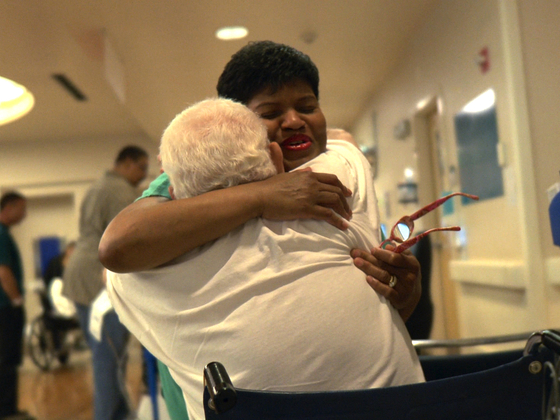
For a school assignment, I watched Peter Nicks's documentary The Waiting Room.  The film takes a look inside the life of Highland Hospital in Oakland, California.  Here, I will share my thoughts on the film and provide a comparison of the Canadian and American health care systems.

The Film
The Waiting Room effectively portrays the life of an urban hospital in the United States.  For the majority of the film, the only sounds we hear are background noises such as beeping monitors, random murmurs, and ringing phones.  The director avoids manipulating the audience by only using music during the opening title sequence, transition sequences, and the ending.

Most importantly, the director lets the subjects tell the stories, and they are compelling ones.  We see a man talking about an old gunshot wound while pointing to his chest, a carpenter talking about his fear of losing his job to a leg injury, and a father expressing concern about his daughter’s strep throat.  All of these subjects are shown in a natural setting, not a staged set, and it makes for effective storytelling. 

One of the most unforgettable moments occurs late in the film, as we see doctors and paramedics trying to revive a 15-year-old gunshot victim.  The absence of music makes it such a chilling scene, and then we watch the haunting shot of his covered body being wheeled into a morgue.

By keeping interviews to a minimum, the director gives us a view of the hospital that is largely uncompromised.  We mostly see doctors talking to patients, patients expressing discomfort or concern while sitting in the waiting room, and receptionists telling patients what they need to know.  When interviews are done, they are effectively presented as voiceovers while the scenes unfold.

As a documentary about the life of a hospital, The Waiting Room succeeds.  However, it lacks a clear, concise message.  There are references to medical insurance, but there are simply not enough scenes about that topic to create a message that is truly sustaining.  Some quick edits could have presented this message effectively, as I noticed that most of the scenes were rather drawn-out. At the same time, the director lets the audience draw their own conclusions, which makes up for the lack of message the film may have.


Health Care: Canada vs. the United States
 Heath insurance is a great concern for some of the subjects in the film.  A 20-something man, for example, is unable to get his testicular tumour surgically removed due to a lack of coverage.

The United States does in fact offer government-run health insurance, but only for a select number of people.  One program, Medicare, is only offered to American citizens age 65 and over and for people under 65 with certain disabilities, according to the United States Department of Health & Human Services.   Another, Medicaid, is offered to only low-income citizens.

Many Americans instead get private health insurance through their employer or somewhere else.  They have to pay premiums in exchange for the insurance.  According to the 2007 Kaiser/HRET Employer Health Benefits Survey, American workers paid an annual average of $3,281 to cover the cost of a family health insurance plan.  On average, workers in the United States paid 16 per cent of overall premiums for single coverage and 28 per cent for family coverage.

American workers have been facing rising premiums at the expense of their paychecks.  The 2007 survey revealed that 21 per cent of employers expected to raise workers’ premiums within the next year. 

Canadians, on the other hand, do not have to pay premiums for most of the health care they receive.   Each of the ten provinces and three territories offer their own public health insurance systems to cover medical costs incurred at private hospitals and doctor’s visits, according to Health Canada.  

Health Canada states that these provincial health care systems are part of a joint federal-provincial health care co-operative unofficially known as ‘Medicare’.  The federal government’s role is to set and maintain standards for each of the provincial health care systems.  Provinces must meet these standards to qualify for federal transfer payments specifically for health care.  This funding mechanism is called the Canada Health Act

According to the Canada Health Act, a province/territory must meet five criteria to receive federal health care payments: public administration, comprehensiveness, universality, portability, and accessibility. A provincial health insurance system must cover every insured person who lives in that province.  The Canada Health Act also restricts user fees (premiums for public health insurance) and additional billing.

Recently, health care in the United States has undergone some major reform.  In 2010, the United States Congress passed the Patient Protection and Affordable Care Act.  President Barack Obama later signed the bill into law.  One of the key components of the Patient Protection and Affordable Care Act is the Pre-Existing Condition Insurance Plan. According to the United States Department of Health & Human Services, the Pre-Existing Condition Insurance Plan gives health care coverage to uninsured citizens with pre-existing conditions.  It is offered in states that do not have a state-run program.  The Patient Protection and Affordable Care Act also offers assistance to adults in their twenties who are struggling financially like the young man with the tumour.  People under the age of 26 are now allowed to stay on a family health insurance plan as per the requirements of the Act.


Wednesday, 23 January 2013

A Poem About a Sony Television Set (Now a Weekly Series)

Once, people said that television would take the role of the parent.  They were right. Here is my second weekly installment of brand anthropomorphism.  Enjoy:

My Daddy's Name is Sony

Daddy sits in one place
and beams his lights at me
as I lie on my side
to watch his stories
and hear his movies

Daddy's name is Sony,
a man of glass and plastic
He listens to his family
laughing at his wit
or something kind of sick

Daddy can go louder
when you press the button
controlling his functions
directing me to friends
holding their figurines

"Time for a commercial!"
proclaims the saintly Daddy
becoming not so saintly
annoying all the family
with his toys and food

From hair to feet,
we are Daddy's stories
waiting to be seen
at Super Bowl halftime,
millions in view

My never-ending Daddy
glowing from a perch
and always changing
his collars and jewels
for a new bottle of wine

Daddy burns mercury
into my bedtime yawn
and summons me to
rest my lids to wake
up to brand new glows

And Daddy will be replaced
at the calling of the year
with a Daddy taller and flatter,
a universe in his head
to make the trains run


Tuesday, 22 January 2013

Expecting A Reaction

I had to post this thought because I think it's an important one.

Every Tweet, every Facebook post, and every blog post, at least my inexperience, is crucial.  They're crucial to me because I post with an audience in mind.  I'm thinking of the reactions to this post at this very moment.

Has this become the norm in the modern age of narcissism?

It's not just what I post online either.  It's what I say in real life.  In all conversations, I attempt to reference something that consumerism impacts.  The only exceptions are crime and the weather.  When I am talking about a Adobe InDesign projects, I am taking about a brand that my peers can relate to.  When I am quoting a movie, I am quoting it because I expect that the listener has already seen it.

If there was no culture based on consumption, what would there be to talk about?

Well, some would say religion.  But religion is a form of consumption.  It can very well be argued that religious sects are brands.  The ethos of Buddhism is to reject possessions, but if a text is what you adhere to, you are thus adhering to a possession.

Sure, some will talk about taboo things like sex and bodily functions.  But those conversational subjects do not weld society together even if certain taboos are not so in some nations.  Those subjects are mere exceptions to the rule, and they are rarely brought up.  Unless, of course, they become packaged as things to consume (Fifty Shades of Grey is a good example of this).

I say because I expect a reaction.  That's how powerful the supermarket is.  It ties us together.  There's no point in talking to walls or furniture.  They do not give us a reason to speak.

A person can cry in pain.  But such an act is only an instinctual reaction.  Conversation requires initiation, and in order to initiate, one has to understand what is conversational.


Saturday, 19 January 2013

A Poem About a Genie Vacuum Cleaner

I always felt like writing a poem as a blog entry.  Strange idea, yes, but it's something I just wanted to do this time around.

In the future, will human beings have legitimate, intimate relationships with household appliances?  Sure, it sounds like an absurd idea, but in this consumer age, there's a lot of absurd stuff going on.  We could be heading down that road  Anyway, here's my poem.  The idea is pretty clear: a man professing his love to his Genie vacuum cleaner.  Enjoy:


My girl's in the locked trunk
sleeping on the cardboard
and snug in her plastic gown,
polished and factory checked
on her way to home

The girl named Genie
is the girl who truly knows me
There is no perfect girl
made outside the skin
Perfection is born in the factory

Genie's all receptive
plugged into the socket
She's humming to the floor
a drone I've known for years
Rambling on and on goes Genie

Genie is my interpreter
of muscling thoughts and vibes
surging through my openings
and living in the cleaning
of fibers in a day repeated twice

Genie cannot make a baby,
but who needs the family
when all you've got is Genie?
Worth more than baby boys and girls
is Genie at $80.55

I will dread the day
when Genie catches fire
to the halting of her motor
and the fade out of her drones,
the dimming of her lights

Hello, my Genie
Farewell, Genie, my love


Friday, 11 January 2013

What TASSIMO Taught Me


The big gift I got for Christmas was a TASSIMO.  For those who are unfamiliar, TASSIMO is an automatic coffee brewer built for the 21st century.  All you have to do is fill it with water, place the mug underneath the spout, and unlatch the lid to put in a T-Disc, which contains the actual coffee.  Set the lid down, press the button, and presto, you've got your morning Joe.  No need for filters, kettles, and grounds.

TASSIMO is a telling sign of where we are headed this century.  Because of machines like TASSIMO, we have fewer excuses for our arms.  The machine does it all for us.

Our long-passed ancestors would be amazed.  In a time where electric grinders were absent, they had to grind coffee beans into grounds by hand.  In the 1890s, it probably took around half an hour to make a proper cup of coffee.  

It's not just TASSIMO that is doing the work for our arms.  Touchscreen technology is rendering the keyboard irrelevant.  Fingers, too, do not have to move up and down as fast.

I always wonder if all these technological advances will lead to technological downfall.  I say this because all mechanized products are really just extensions of retired technologies.  The automobile is an extension of the wagon, and Wi-Fi is an extension of the ham radio.  If we're doing fewer things with our arms, fingers, and feet, how claim safety in our adherence to all machinery? After all, machines have their limitations.  They can misinterpret what we say (just ask Siri).  Their perfections are awesome, but their dangers are egregious.  If the Internet were to crash, much of society would collapse, and it would be far harder to pick up the pieces.  

It really is just common sense.  If your computer overheats, it will catch fire and suddenly become a danger to your life.  The old-fashioned typewriter could not do that.  And if you can compare the number of chuckwagon accidents to the number of car accidents, it would be like comparing a flea to an ostrich.  The lesser technology ultimately wins out even if it less convenient.  The only exception to this rule I can think of is the candle.

The things that advance our lives have ironically made us more vulnerable.  It really makes you think of  bigger concepts.  An example is life expectancy.  Our life expectancy is increasing, but there is more toxicity to the air.  More nitrogens and carcinogens.  As humans, we are probably the most vulnerable species because we rely so much on technology, and without it, we'd be dead in days.  We cannot simply grow fur and hibernate.  Evolution is also our devolution.  To survive is to acknowledge that very contradiction.

It's amazing what you can think of when you look at a TASSIMO.


Thursday, 3 January 2013

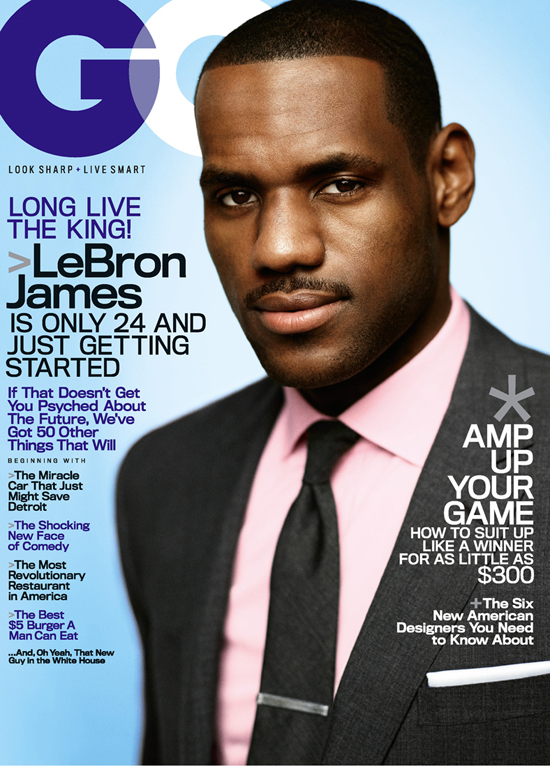
Magazines: Mirror Images or Fantasies?


I am learning a lot about the business of magazines in this semester's Creative Communications program.  The most successful magazines are geared towards specific target audiences.  These magazines appeal to target audiences through story content and visual devices.

Depending on the target market you're in, there will be a certain magazine that is your ideal world.  You will have your own definition of what is cool.  If you're reading Wired, you will want to consume all that is technologically superior.  If you're reading GQ, you will want to dress to impress.  If you're a high-schooler who reads Sports Illustrated, you will want to emulate all that is mighty about your most admired athletes.

This brings me to my main question: do people read magazines because they see mirror images of what they are? Or do they read them because they see a life they wish to live or an icon they wish to be?

GQ wouldn't be around today if it didn't identify what its target audiences wore.  But there is another reason why it succeeds.  It shows images of the ideal and the new.  To me, it's plausible to say that people read magazines for both affirmation and discovery -- affirmation of the lifestyles they already live, discovery of the lives they wish to live.  You buy the magazine because either the celebrity is wearing what you are wearing or you want to wear what the celebrity is wearing or eat what the celebrity is cooking.

Culture does not really change on its own terms; the media bears major influence.  If there is a major cultural shift, it's because we don't look what we see in the mirror anymore.  We grow tired of ourselves and want to don new identities.  Thus, the magazine has a message: you can embrace your identity or destroy it.

The magazine also lets you know when to don a new identity.  When everyone emulates the new and unforeseen  the allure is gone, and the sense of individuality is lost.  The same institutions (magazines) that push these images of the 'new' and the 'cool' will then reject them and start from anew.

Some eventually realize all of this and wonder what is cool.  If the cat's out of the bag, out pops the age-old question of whether or not the facade of cool will endear.  And if you try to define things like 'hip and 'cool' down to the level of atoms, you will go bezerk at trying to find the answer because a culture in flux always redefines what is cool.