Wednesday, 30 January 2013

The Health Care Supermarket


(source: kickstarter.com)

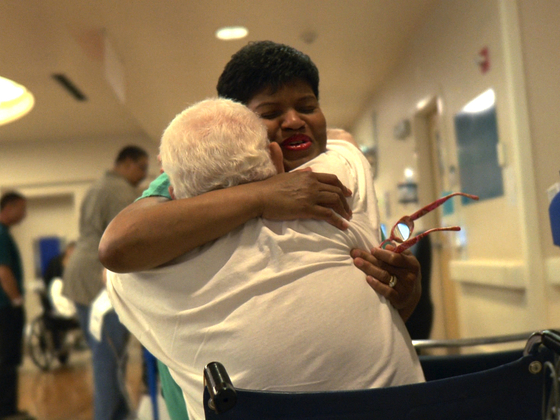
For a school assignment, I watched Peter Nicks's documentary The Waiting Room.  The film takes a look inside the life of Highland Hospital in Oakland, California.  Here, I will share my thoughts on the film and provide a comparison of the Canadian and American health care systems.

The Film
The Waiting Room effectively portrays the life of an urban hospital in the United States.  For the majority of the film, the only sounds we hear are background noises such as beeping monitors, random murmurs, and ringing phones.  The director avoids manipulating the audience by only using music during the opening title sequence, transition sequences, and the ending.

Most importantly, the director lets the subjects tell the stories, and they are compelling ones.  We see a man talking about an old gunshot wound while pointing to his chest, a carpenter talking about his fear of losing his job to a leg injury, and a father expressing concern about his daughter’s strep throat.  All of these subjects are shown in a natural setting, not a staged set, and it makes for effective storytelling. 

One of the most unforgettable moments occurs late in the film, as we see doctors and paramedics trying to revive a 15-year-old gunshot victim.  The absence of music makes it such a chilling scene, and then we watch the haunting shot of his covered body being wheeled into a morgue.

By keeping interviews to a minimum, the director gives us a view of the hospital that is largely uncompromised.  We mostly see doctors talking to patients, patients expressing discomfort or concern while sitting in the waiting room, and receptionists telling patients what they need to know.  When interviews are done, they are effectively presented as voiceovers while the scenes unfold.

As a documentary about the life of a hospital, The Waiting Room succeeds.  However, it lacks a clear, concise message.  There are references to medical insurance, but there are simply not enough scenes about that topic to create a message that is truly sustaining.  Some quick edits could have presented this message effectively, as I noticed that most of the scenes were rather drawn-out. At the same time, the director lets the audience draw their own conclusions, which makes up for the lack of message the film may have.


Health Care: Canada vs. the United States
 Heath insurance is a great concern for some of the subjects in the film.  A 20-something man, for example, is unable to get his testicular tumour surgically removed due to a lack of coverage.

The United States does in fact offer government-run health insurance, but only for a select number of people.  One program, Medicare, is only offered to American citizens age 65 and over and for people under 65 with certain disabilities, according to the United States Department of Health & Human Services.   Another, Medicaid, is offered to only low-income citizens.

Many Americans instead get private health insurance through their employer or somewhere else.  They have to pay premiums in exchange for the insurance.  According to the 2007 Kaiser/HRET Employer Health Benefits Survey, American workers paid an annual average of $3,281 to cover the cost of a family health insurance plan.  On average, workers in the United States paid 16 per cent of overall premiums for single coverage and 28 per cent for family coverage.

American workers have been facing rising premiums at the expense of their paychecks.  The 2007 survey revealed that 21 per cent of employers expected to raise workers’ premiums within the next year. 

Canadians, on the other hand, do not have to pay premiums for most of the health care they receive.   Each of the ten provinces and three territories offer their own public health insurance systems to cover medical costs incurred at private hospitals and doctor’s visits, according to Health Canada.  

Health Canada states that these provincial health care systems are part of a joint federal-provincial health care co-operative unofficially known as ‘Medicare’.  The federal government’s role is to set and maintain standards for each of the provincial health care systems.  Provinces must meet these standards to qualify for federal transfer payments specifically for health care.  This funding mechanism is called the Canada Health Act. 

According to the Canada Health Act, a province/territory must meet five criteria to receive federal health care payments: public administration, comprehensiveness, universality, portability, and accessibility. A provincial health insurance system must cover every insured person who lives in that province.  The Canada Health Act also restricts user fees (premiums for public health insurance) and additional billing.

Recently, health care in the United States has undergone some major reform.  In 2010, the United States Congress passed the Patient Protection and Affordable Care Act.  President Barack Obama later signed the bill into law.  One of the key components of the Patient Protection and Affordable Care Act is the Pre-Existing Condition Insurance Plan. According to the United States Department of Health & Human Services, the Pre-Existing Condition Insurance Plan gives health care coverage to uninsured citizens with pre-existing conditions.  It is offered in states that do not have a state-run program.  The Patient Protection and Affordable Care Act also offers assistance to adults in their twenties who are struggling financially like the young man with the tumour.  People under the age of 26 are now allowed to stay on a family health insurance plan as per the requirements of the Act.


Wednesday, 23 January 2013

A Poem About a Sony Television Set (Now a Weekly Series)

Once, people said that television would take the role of the parent.  They were right. Here is my second weekly installment of brand anthropomorphism.  Enjoy:

My Daddy's Name is Sony

Daddy sits in one place
and beams his lights at me
as I lie on my side
to watch his stories
and hear his movies

Daddy's name is Sony,
a man of glass and plastic
He listens to his family
laughing at his wit
or something kind of sick

Daddy can go louder
when you press the button
controlling his functions
directing me to friends
holding their figurines

"Time for a commercial!"
proclaims the saintly Daddy
becoming not so saintly
annoying all the family
with his toys and food

From hair to feet,
we are Daddy's stories
waiting to be seen
at Super Bowl halftime,
millions in view

My never-ending Daddy
glowing from a perch
and always changing
his collars and jewels
for a new bottle of wine

Daddy burns mercury
into my bedtime yawn
and summons me to
rest my lids to wake
up to brand new glows

And Daddy will be replaced
at the calling of the year
with a Daddy taller and flatter,
a universe in his head
to make the trains run


Tuesday, 22 January 2013

Expecting A Reaction

I had to post this thought because I think it's an important one.

Every Tweet, every Facebook post, and every blog post, at least my inexperience, is crucial.  They're crucial to me because I post with an audience in mind.  I'm thinking of the reactions to this post at this very moment.

Has this become the norm in the modern age of narcissism?

It's not just what I post online either.  It's what I say in real life.  In all conversations, I attempt to reference something that consumerism impacts.  The only exceptions are crime and the weather.  When I am talking about a Adobe InDesign projects, I am taking about a brand that my peers can relate to.  When I am quoting a movie, I am quoting it because I expect that the listener has already seen it.

If there was no culture based on consumption, what would there be to talk about?

Well, some would say religion.  But religion is a form of consumption.  It can very well be argued that religious sects are brands.  The ethos of Buddhism is to reject possessions, but if a text is what you adhere to, you are thus adhering to a possession.

Sure, some will talk about taboo things like sex and bodily functions.  But those conversational subjects do not weld society together even if certain taboos are not so in some nations.  Those subjects are mere exceptions to the rule, and they are rarely brought up.  Unless, of course, they become packaged as things to consume (Fifty Shades of Grey is a good example of this).

I say because I expect a reaction.  That's how powerful the supermarket is.  It ties us together.  There's no point in talking to walls or furniture.  They do not give us a reason to speak.

A person can cry in pain.  But such an act is only an instinctual reaction.  Conversation requires initiation, and in order to initiate, one has to understand what is conversational.


Saturday, 19 January 2013

A Poem About a Genie Vacuum Cleaner

I always felt like writing a poem as a blog entry.  Strange idea, yes, but it's something I just wanted to do this time around.

In the future, will human beings have legitimate, intimate relationships with household appliances?  Sure, it sounds like an absurd idea, but in this consumer age, there's a lot of absurd stuff going on.  We could be heading down that road  Anyway, here's my poem.  The idea is pretty clear: a man professing his love to his Genie vacuum cleaner.  Enjoy:


My girl's in the locked trunk
sleeping on the cardboard
and snug in her plastic gown,
polished and factory checked
on her way to home

The girl named Genie
is the girl who truly knows me
There is no perfect girl
made outside the skin
Perfection is born in the factory

Genie's all receptive
plugged into the socket
She's humming to the floor
a drone I've known for years
Rambling on and on goes Genie

Genie is my interpreter
of muscling thoughts and vibes
surging through my openings
and living in the cleaning
of fibers in a day repeated twice

Genie cannot make a baby,
but who needs the family
when all you've got is Genie?
Worth more than baby boys and girls
is Genie at $80.55

I will dread the day
when Genie catches fire
to the halting of her motor
and the fade out of her drones,
the dimming of her lights

Hello, my Genie
Farewell, Genie, my love


Friday, 11 January 2013

What TASSIMO Taught Me


The big gift I got for Christmas was a TASSIMO.  For those who are unfamiliar, TASSIMO is an automatic coffee brewer built for the 21st century.  All you have to do is fill it with water, place the mug underneath the spout, and unlatch the lid to put in a T-Disc, which contains the actual coffee.  Set the lid down, press the button, and presto, you've got your morning Joe.  No need for filters, kettles, and grounds.

TASSIMO is a telling sign of where we are headed this century.  Because of machines like TASSIMO, we have fewer excuses for our arms.  The machine does it all for us.

Our long-passed ancestors would be amazed.  In a time where electric grinders were absent, they had to grind coffee beans into grounds by hand.  In the 1890s, it probably took around half an hour to make a proper cup of coffee.  

It's not just TASSIMO that is doing the work for our arms.  Touchscreen technology is rendering the keyboard irrelevant.  Fingers, too, do not have to move up and down as fast.

I always wonder if all these technological advances will lead to technological downfall.  I say this because all mechanized products are really just extensions of retired technologies.  The automobile is an extension of the wagon, and Wi-Fi is an extension of the ham radio.  If we're doing fewer things with our arms, fingers, and feet, how claim safety in our adherence to all machinery? After all, machines have their limitations.  They can misinterpret what we say (just ask Siri).  Their perfections are awesome, but their dangers are egregious.  If the Internet were to crash, much of society would collapse, and it would be far harder to pick up the pieces.  

It really is just common sense.  If your computer overheats, it will catch fire and suddenly become a danger to your life.  The old-fashioned typewriter could not do that.  And if you can compare the number of chuckwagon accidents to the number of car accidents, it would be like comparing a flea to an ostrich.  The lesser technology ultimately wins out even if it less convenient.  The only exception to this rule I can think of is the candle.

The things that advance our lives have ironically made us more vulnerable.  It really makes you think of  bigger concepts.  An example is life expectancy.  Our life expectancy is increasing, but there is more toxicity to the air.  More nitrogens and carcinogens.  As humans, we are probably the most vulnerable species because we rely so much on technology, and without it, we'd be dead in days.  We cannot simply grow fur and hibernate.  Evolution is also our devolution.  To survive is to acknowledge that very contradiction.

It's amazing what you can think of when you look at a TASSIMO.


Thursday, 3 January 2013

Magazines: Mirror Images or Fantasies?


I am learning a lot about the business of magazines in this semester's Creative Communications program.  The most successful magazines are geared towards specific target audiences.  These magazines appeal to target audiences through story content and visual devices.

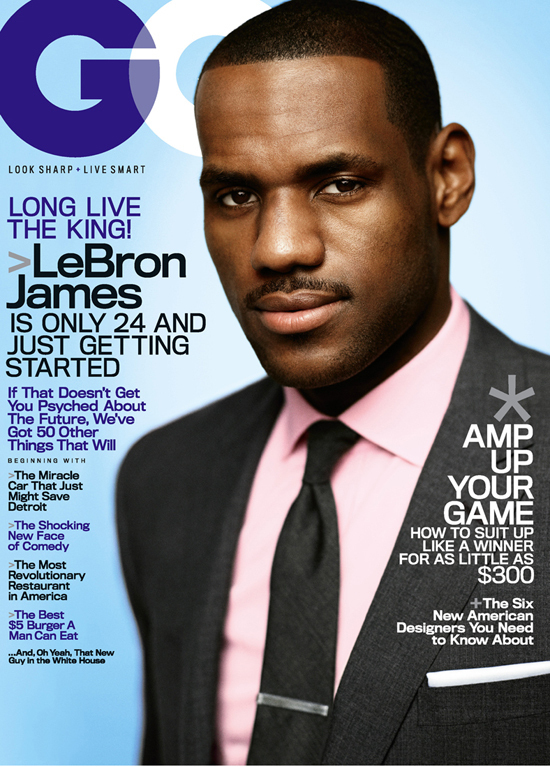
Depending on the target market you're in, there will be a certain magazine that is your ideal world.  You will have your own definition of what is cool.  If you're reading Wired, you will want to consume all that is technologically superior.  If you're reading GQ, you will want to dress to impress.  If you're a high-schooler who reads Sports Illustrated, you will want to emulate all that is mighty about your most admired athletes.

This brings me to my main question: do people read magazines because they see mirror images of what they are? Or do they read them because they see a life they wish to live or an icon they wish to be?

GQ wouldn't be around today if it didn't identify what its target audiences wore.  But there is another reason why it succeeds.  It shows images of the ideal and the new.  To me, it's plausible to say that people read magazines for both affirmation and discovery -- affirmation of the lifestyles they already live, discovery of the lives they wish to live.  You buy the magazine because either the celebrity is wearing what you are wearing or you want to wear what the celebrity is wearing or eat what the celebrity is cooking.

Culture does not really change on its own terms; the media bears major influence.  If there is a major cultural shift, it's because we don't look what we see in the mirror anymore.  We grow tired of ourselves and want to don new identities.  Thus, the magazine has a message: you can embrace your identity or destroy it.

The magazine also lets you know when to don a new identity.  When everyone emulates the new and unforeseen  the allure is gone, and the sense of individuality is lost.  The same institutions (magazines) that push these images of the 'new' and the 'cool' will then reject them and start from anew.

Some eventually realize all of this and wonder what is cool.  If the cat's out of the bag, out pops the age-old question of whether or not the facade of cool will endear.  And if you try to define things like 'hip and 'cool' down to the level of atoms, you will go bezerk at trying to find the answer because a culture in flux always redefines what is cool.


Friday, 7 December 2012

They call it 'Happy Holidays'...

... because with all the emphasis on store deals and Santa Claus, it's like Jesus (or the concept of Jesus) never existed.

Happy Holidays/Merry Christmas


Thursday, 29 November 2012

Volcano: My Personal Brand

My logo.

For my Advertising class in the Red River College of Applied Arts, Science and Technology Creative Communications program, we have been assigned to create personal brands for ourselves.  As you can see, I had to design a logo for this project.  I created a moniker called "Volcano".

Why "Volcano"? Why not just "Zach Samborski"? Well, I figured it would be good to create a concept that stood out.  In many ways, I am like a volcano.  Before it erupts, a volcano is simply just a form of mass rock.  When the volcano erupts, it stands out above everything else.

I am like a volcano in that I am as conservative as the rocks that surround me from time to time.  But on the odd occasion, I'll erupt -- not in anger, but rather in terms of projecting things like major creative ideas, opinions, and humor.  Some people have their own concepts.  For Hunter S. Thompson, there was Raoul Duke.  For me, there is The Volcano.

Like the volcano that erupts, I make my ideas known and my opinions clear when the time calls for them.  I will not be afraid to speak my mind on a given subject.  In my Journalism class, I spoke with anger when discussing parking meter increases.  I noticed I had the attention of almost the entire room.  In The Writer's Craft class, I was doing crazy song and dance routines that also had the attention of the entire room.

Like a volcano, I am unpredictable, and when I erupt with ideas, I seem to unleash them all at once.  I believe in the dramatic and the conceptual, and I try to incorporate the conceptual into almost anything, including the logo above.

Like a volcano, I make the strongest statement.  Like the volcano's eruption, I form strong opinions.  I am rarely apathetic.  I believe in a world where the unjust are rightly punished, where kindness is rewarded.  And I believe that collective thought should never take precedence over individual creativity.

And once I exit this Creative Communications program, I hope to leave my conceptual mark in the real world.  As someone who is hoping to major in Public Relations, I want to create campaigns of intrigue and memorability.  I want to take complicated messages and simplify them into memorable logos or one-word statements.  I want to create things that cannot go unnoticed.

It is necessary to blend in with all other rocks for awhile and then erupt with ideas at the precise moments.  Eruptions are not memorable if they are never-ending.  Eruptions are only memorable because they take people by surprise.  Sooner or later, I want to be known as someone who took the world by surprise.


Thursday, 22 November 2012

"Viewing" Audiences

I consider myself to be a highly analytical person.  And whenever I hear about a television show getting big, I try to picture the audience watching that particular show.

Take the show True Blood, for example (or just about any other show on HBO).  I have never seen a single episode of True Blood, but I have seen video clips and images.  I have also seen some of the marketing campaigns for that show (and the DVD covers).  After seeing these videos and images, I sort of have a picture of the typical True Blood viewer.  All of the actors and actresses on the show are in their mid 20s to early 40s, and I picture the audience to be in that same age range.

The True Blood viewer probably lives in an apartment or condominium, and is likely female.  She probably listens to Adele and goes to Starbucks every day.  I'm guessing she may read some Nicholas Sparks novels from time to time.  She probably likes to talk about Ryan Gosling or whoever you find in PEOPLE.

It may sound stupid to say you know who the typical True Blood viewer is.  But if you look at how the show is marketed, you can see there are subliminal messages intended for specific demographics.

Just take a look at this picture of the cast:


Look at how they are dressed.  Look at their facial expressions.  Look at how they pose.  If you're in your late twenties, you can relate to this depiction.  You can relate to the sexual undertones and the depictions of youth.
 
You cannot create a successful television show if you invent characters out of thin air.  You need to know what people are wearing, what kind of alcohol people are drinking, and what fascinated people.  The most successful television shows are ones with characters that mirror their audiences.  People in their late twenties and early thirties obssess over this show because they can relate to the characters. 
 
In many ways, it is our narcissism that dicates our viewing habits.  We want to be told that we are important.  If we get that message, then we will listen.  People do not watch True Blood because it is about vampires.  People watch True Blood because it's a show about twenty-something and thirty-something yuppies who encounter what we call "first-world problems".  Vampirism is just the hyperbole.  Cosmopolitanism is the main message, and that is why I picture a cosmopolitan audience watching True Blood.  The "vampires" on the show act the way cosmopolitan young adults are supposed to act.


Thursday, 15 November 2012

The allure of international brands

The Winnipeg Free Press reported today that Marshalls, an American retail store that specializes in clothing, will be opening its first Winnipeg store sometime next year.

This probably would not make headlines in the United States.  But whenever a store from another country expands into Canada, people take notice.  Famous Dave's, Target, Best Buy, Forever 21, and Victoria's Secret all got considerable media attention when they expanded into Winnipeg.  So did Walmart when it purchased Woolco back in the early 1990s.


Remember Woolco?


Sure, Americans are brand-savvy.  But because there are so many brands in the United States, many chains simply fade into the background.  If Target or Walmart opens up in a small city, it really is no big deal.  But in Canada, it is a big deal.  American chains are always at the forefront of Canadian consumer consciousness.  People line up for blocks when this new, exciting store opens.

But why is it such a big deal? Why do international brands garner so much attention in Canada? 

Because in this country, there seems to be a collective sense of feeling small.  As Canadians, we value our independence, but we admit that our influence on the world stage pales in comparison to that of the United States.  We are attracted to American brands because the influence of American culture is strong enough to "suck" us in.  But we are also attracted to American brands because, in many ways, we value being connected to the rest of the world.  Culture is now globalized, and so is our shopping mentality.  

In matters like politics, Canadians may resist the influence of the United States.  But consumer culture transcends political barriers and divisions.  We also marvel at brands from other countries.  IKEA (Sweden) is now the talk of the town in Winnipeg, and many of us also drive Japanese cars.  

What we are witnessing is not the Americanization of our culture and identity.  What we are witnessing instead is the breaking down of cultural barriers.